Purdue Researchers develop a novel human brain model to study Alzheimer’s Disease
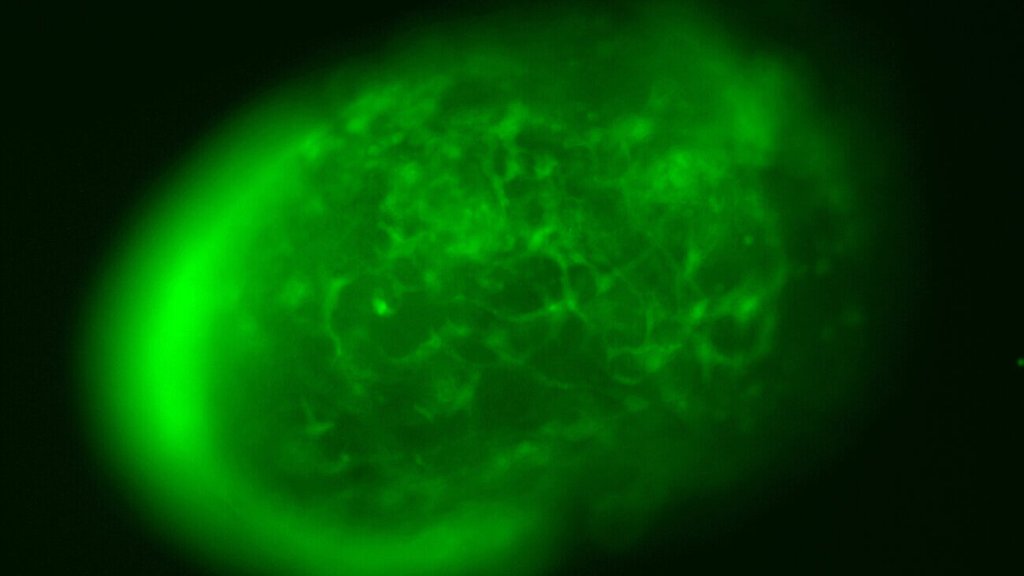
Purdue University College of Veterinary Medicine researchers are taking an innovative approach to studying Alzheimer’s disease. Dr. Ranjie Xu, an assistant professor in the Department of Basic Medical Sciencesand a member of the Purdue Institute for Integrative Neuroscience, has developed a sophisticated 3D human mini-brain model to reveal new insights into how the disease progresses and to validate promising new treatments.
This spring, his team published a research article on their findings in the Nature journal Molecular Psychiatry.
The lab’s new tool is an organoid, an artificially grown mass of cells built from human pluripotent stem cells and mimicking the functions of an organ – in this case, the brain. This type of model is often called a “brain on a chip” or “mini-brains” because it’s a miniaturized laboratory system designed to mimic key aspects of the brain’s structure and function.
The researchers developed the tool specifically for studying sporadic Alzheimer’s disease (sAD), which accounts for more than 95% of AD cases and has no clear genetic cause. Most existing research tools are based on familial Alzheimer’s – a much rarer, inherited form of the disease.
While sporadic AD is the prevailing form of Alzheimer’s, it’s influenced by multiple factors, making it difficult to identify causes and patterns.
“Sporadic AD doesn’t have a clear cause. There are no specific gene mutations,” Dr. Xu says. “It’s really hard to get an sAD model. That’s what we wanted to do here in this study.” Read more.
Disease detectives: PVM scientists help state officials battle against Avian Influenza
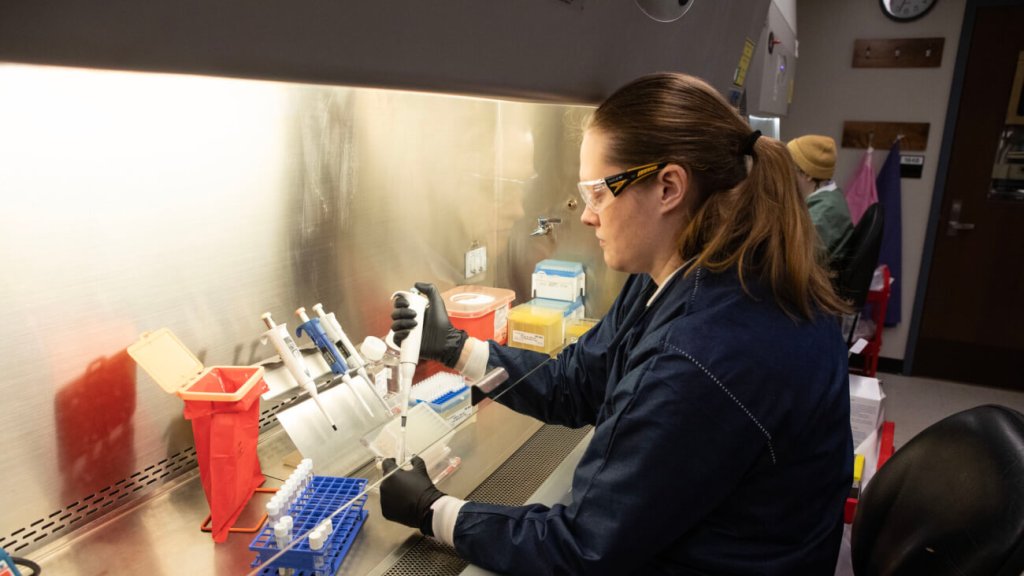
On the south end of Purdue University’s West Lafayette campus during the spring semester, a critical battle unfolded inside the Willie M. Reed Animal Disease Diagnostic Laboratory – a high-stakes hub where veterinary diagnostic experts served as disease detectives and every sample was a potential clue in stopping an outbreak of highly pathogenic avian influenza (HPAI) on Indiana farms.
Here, under fluorescent lights and the hum of thermocyclers, team members worked sometimes late into the night, piecing together puzzles in the race to safeguard Indiana’s chickens, turkeys and ducks against the emerging disease threat.
The Reed Laboratory is one of two locations that make up the Indiana Animal Disease Diagnostic Laboratory (ADDL). As a first responder in times of agricultural crisis, the ADDL helps protect the health of livestock and – by extension – human food supplies and public health. With a high level of collaboration among ADDL scientists and the Indiana State Board of Animal Health (BOAH), the organizations have forged a unique partnership in protecting livestock, public health and the food supply. Read more.
Unlocking the secrets of Alzheimer’s disease
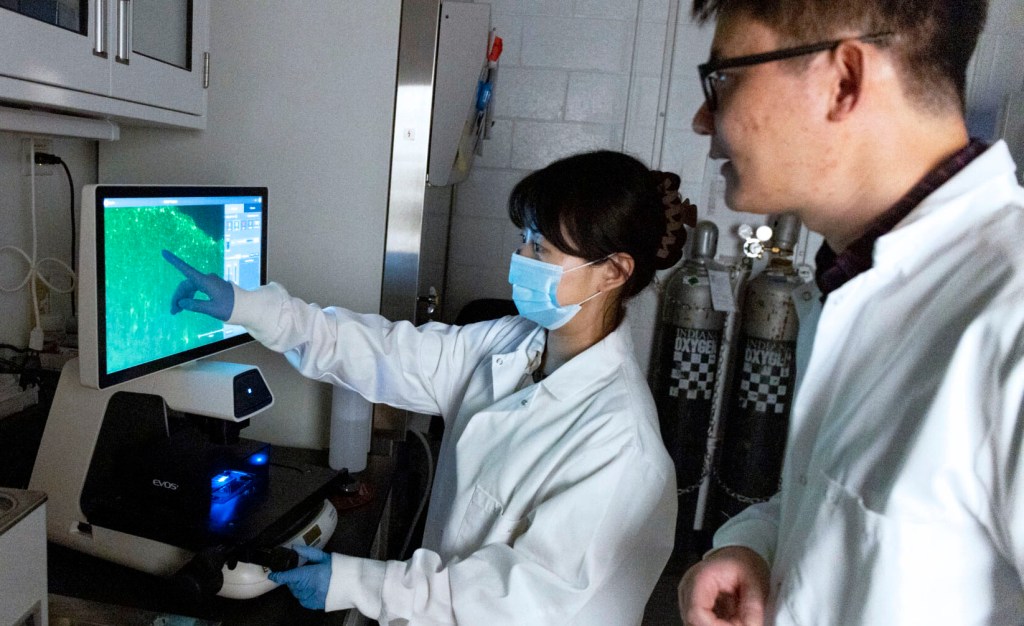
In the battle against Alzheimer’s disease (AD), a progressive neurodegenerative condition that affects millions worldwide, new research could lead to a deeper understanding of its mechanisms and the development of more effective treatments.
Dr. Ranjie Xu, a Purdue assistant professor in the College of Veterinary Medicine’s Department of Basic Medical Sciences and a member of the Purdue Institute for Integrative Neuroscience, is undertaking transformative research into Alzheimer’s disease and related dementias.
Through innovative studies involving human stem cell models, he’s seeking to replicate human Alzheimer’s disease pathology, providing critical insights into disease progression and potential therapeutic targets. Read more.
 Hydrangea Studio