Outer Spaces
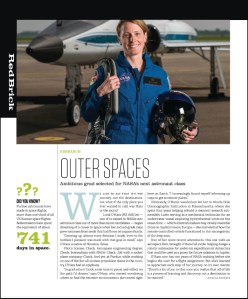
We like to say that it’s the journey, not the destination. But what if the only place you ever wanted to go was the moon or Mars?
Laurel O’Hara, one of 12 named to the 2017 NASA astronaut class out of more than 18,000 applicants, began dreaming of a career in space when her second-grade class grew tomatoes from seeds that had flown on a space shuttle.
“Growing up, almost every decision I made, even down to the hobbies I pursued, was made with that goal in mind,” says O’Hara, a native of Houston, Texas.
Pilot’s license: Check. Aerospace engineering degree: Check. Internship with NASA: Check. Job with a rocket plane company: Check. And yet, at Purdue, while working on one of the few all-women propulsion teams in the country, O’Hara had an epiphany. Read more.
Why Greater Lafayette? Local business owners explain why this is the place to be
Stephanie and Chris Deckard, owners of Velvet Lotus Photography, lived on Perrin Avenue for nine years before moving to a westside subdivision. “We immediately felt so detached, even with our studio still in town,” Stephanie says.
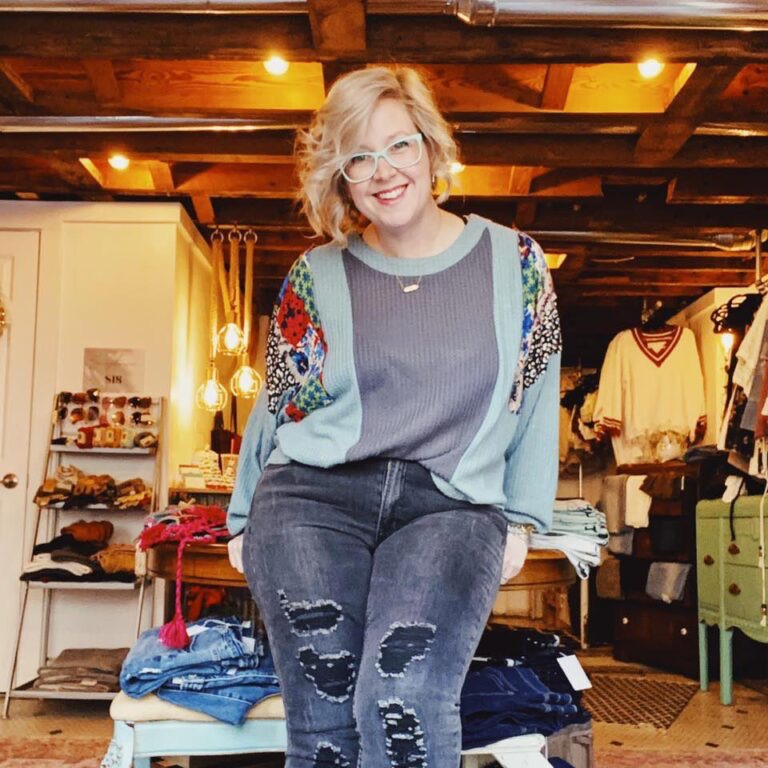
Relocating their business from Kossuth Street to the heart of the city, the couple settled into their new digs. Then Stephanie had a brainstorm. “Having clothing to style my clients in felt like a natural shift, without being so overwhelming that I couldn’t work my photography as well,” she says.
Nearly two years ago, Mad Love Boutique opened next door to the photography studio. In a space that the couple renovated themselves, Stephanie sells women’s clothing, jewelry and accessories among antique furnishings. Read more.
David Ross’ lasting mark

In 1922, David Edward Ross, engineer, businessman and noted Purdue University alumnus, asked Tippecanoe County Judge Henry Vinton to introduce him to another Purdue graduate of note —playwright and syndicated newspaper columnist George Ade, five years his senior.
After meeting in the judge’s chambers, Ross asked Ade to take a short drive with him. Parking at an old dairy farm northwest of Purdue’s tiny campus, they climbed uphill, then peered down into a vast natural bowl carved into the landscape.
Then, as Robert Kriebel writes in “Ross-Ade: Their Purdue Stories, Stadium and Legacies,” the engineer gave a pitch something like this:
“’Here is where we [Trustees] will put our recreational field and stadium. You’ll notice that much of the work of grading and providing a hillside of just the right slope for a stadium grandstand has already been done [by Nature]. It’s about the same size as the ancient stadium of Athens. I had a man look up the dimensions. There isn’t much difference.’”
Ade nodded in agreement, Kriebel notes, saying it did indeed seem to be about the same size as the Panathenaic Stadium, which Ade had visited in 1898. But, he wondered, what did this have to do with him?
Ross said that he hoped Ade would help him finance a stadium for the uni- versity, to which Ade responded that he’d tried to promote several projects at Purdue, but had never had much luck. He concluded, “‘To help someone else would be a great relief. So my answer is yes.’”
 Hydrangea Studio