Etched in stone

In the early 2000s, the Crawfordsville Public Library drew up plans to repurpose the old Carnegie Library and build a much larger facility out of brick, stone and glass on the other side of Washington Street, the main thoroughfare running north and south through this town of about 16,000.

Joe and I were living in a 1950s brick ranch on Country Club Road at the time, raising young children on a tight budget. When a letter arrived asking for contributions to the library’s building fund, we sent in a modest check – likely no more than $50.

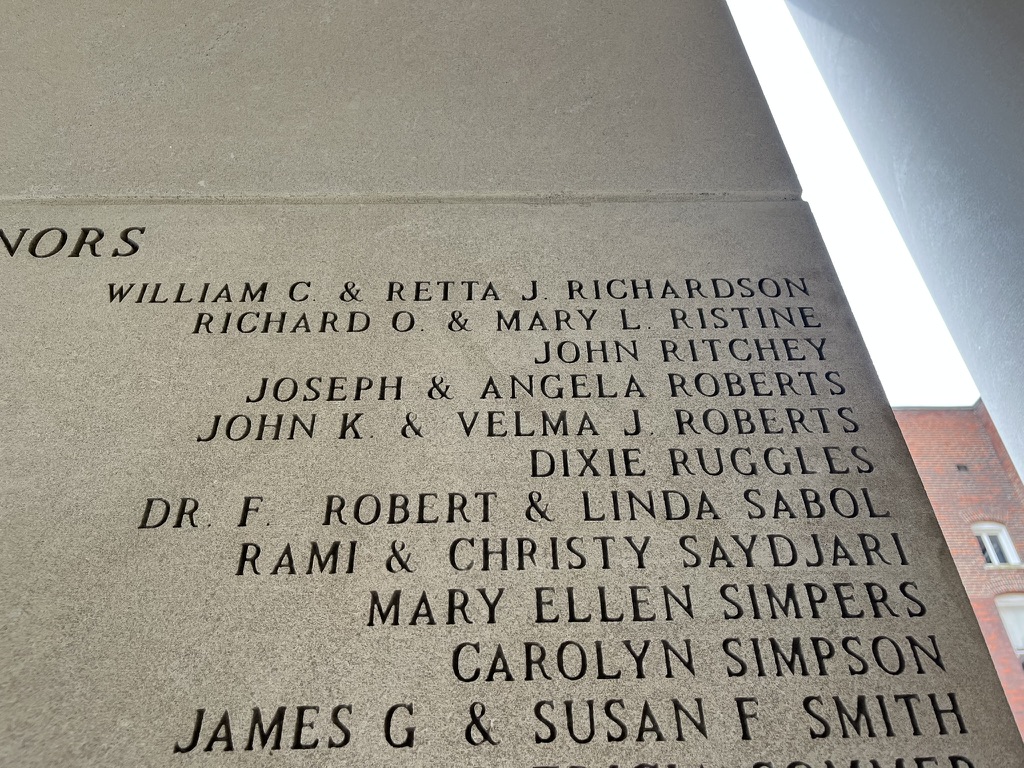
Much to my surprise, when I attended the grand opening of the new library in 2005 with my girls, I saw my name and Joe’s etched into a stone wall near the entrance. Directly underneath us on the honor roll of donors were the names of my in-laws, Ken and Velma Roberts. 
I first met the Roberts family in 1987, the summer that Joe and I fell in love at Ball State University. One weekend, Joe drove us to his family’s home in rural Crawfordsville, where fields of corn and beans swayed in the July breeze. 

A liberal suburban girl at heart, I worried I wouldn’t have much in common with two empty nesters living out in the country. And yet from the first night I stepped into their house, I immediately felt welcome in the loving home that Ken and Velma had created. 

That weekend, as we crowded in the dining room to celebrate the birthday of one of Joe’s nieces, I thought to myself, “If I marry this guy, I get all of his family as a bonus.”

Joe and I married at the Wabash College Chapel in 1990. As we posed for photos, me in an ivory beaded dress and Joe in a gray tuxedo, my new in-laws stood alongside us. Velma, a short brunette, looked elegant in mint green chiffon, while Ken, a foot taller, towered over her in a tux that matched his son’s.

My brother-in-law Bruce joked that I was now officially one of the “outlaws.” But everyone knew the truth: to Ken and Velma, there were no in-laws. We were just family. 

Settling into a town two and a half hours away, we drove to Crawfordsville on weekends and for the family’s annual Christmas Eve party, simply called Roberts Family Christmas. 

Five years later, I accepted a position in Crawfordsville and we purchased a DIY special, a 1920s Craftsman bungalow on Market Street. For three months, I lived with Ken and Velma while I started my new job, Joe packed up our existing home and we rehabbed the bungalow on weekends. 

As Velma cooked meals and I washed dishes at the Roberts homestead every night, Ken rode his lawnmower around their vast yard and tended to his Calla lilies and irises. 

When our firstborn arrived in 1998, Ken and Velma waited with my parents at the hospital in Indianapolis for the birth of their ninth grandchild. In 2001, when their tenth and final grandchild was born, they cared for Eve until we came home with Allie a few days later. 
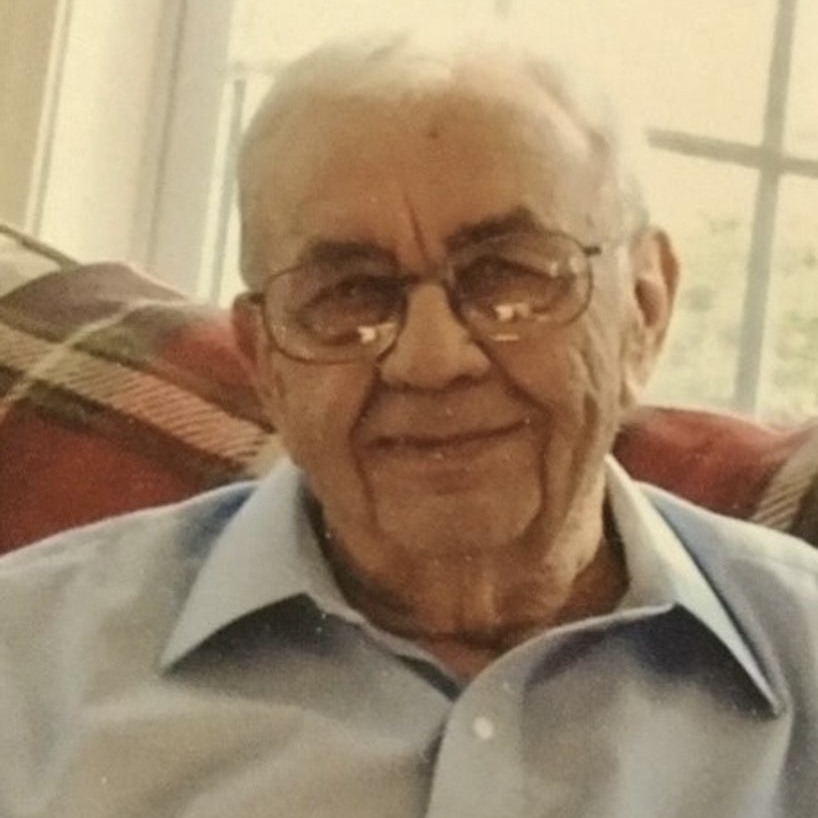
As the children grew, so did their bond with Grandpa and Grandma Roberts. They had tea parties with root beer in Grandma’s kitchen and rode around the yard with Grandpa on his riding mower. Eve and Allie loved how genuinely interested their grandparents were in their school activities and hobbies.

Life eventually took us further away. In 2012, we moved to the Lafayette/West Lafayette area, and in 2022, to Cincinnati. Between visits, we stayed in touch via phone and Facebook, where on days when he had nothing profound to say, my father-in-law would simply post, “Still vertical.”

Not long after our move to Lafayette, my mother-in-law became ill. Ken devoted the next four years to caring full-time for Velma, learning to cook regularly for the first time in his life. Soon, he was baking homemade cinnamon rolls, casseroles and decadent brownies. 

For his 80-something birthday, the family gifted Ken with a stack of cookbooks. When he unwrapped an apron and tied it on, the living room erupted in laughter. My father-in-law, in on the joke, laughed alongside us.

Velma died in 2017. Ken remained in their home until last November, seven months after we celebrated his 95th birthday. With more than 50 people in the immediate family by then, we had to rent an event space in a church, where some of the grandchildren and great-grandchildren shared tributes to Grandpa Roberts as we snacked on cookies and cupcakes. 

Last winter, after moving to assisted living, Ken was hospitalized with double pneumonia, caught COVID in rehab and was diagnosed with a pulmonary embolism, defying the odds on all three. During one of our last visits this spring, he was still vertical in his office chair, checking Major League Baseball scores on his computer and sharing funny stories about the staff and residents. 

Last Wednesday, Ken was hospitalized for the final time. By the time Joe and I arrived after midnight, he was sleeping peacefully. 

Just after 5 p.m. on Thursday, Ken slipped away. He was 96 years and 3 months old.

On Friday, after running some funeral-related errands, Joe and I stopped at one of our local favorites, Arni’s, just west of the library. Walking back toward the van after lunch, I told Joe I wanted to visit the donor wall next door.

Standing there, looking at our names etched one on top of the other, I felt a sense of shared history with my father-in-law. 

The family that Ken built, the love he gave and the names we share are permanently set in stone. I am honored to stand alongside him for as long as that building remains. 

One thing to know

Eve and Allie

(Above: My girls in 2002.)

Twenty-five years ago, I swallowed my pride and accepted $25 an article.

It was summer 2001, the Dot Com Bubble had burst, and I had lost the anchor contract that funded my consulting business. With a toddler and a newborn at home, I was in a tough spot and needed to bring in income. Fast.

I called a local editor whom I had politely turned down the year before because her rate was “too low.” She didn’t seem to remember me, thankfully, and offered me the gig again.

That summer, I went on the road, often with my girls in tow, conducting interviews with a notepad and pen at farms and county fairs. I mapped out stories in my head while taking quick showers, and I typed frantically during nap times, turning out dozens of articles over the next few months.

Did I make a fortune? Absolutely not. But looking back, that grueling summer taught me two valuable lessons:

Market value supersedes ego. It doesn’t matter what you want to charge if no one is willing to pay it. Taking a lower rate at that moment got me through a tough spot and ultimately led to much-better paying opportunities.

A valuable ROI might be hiding under a low price tag. That summer, I built a large portfolio of clips, became a much more efficient writer and honed the storytelling skills that I still use today.

In fact, those articles eventually led to regular writing assignments at a nearby university. When one of my university clients later offered me a full-time role, I paused my business to accept it, spending the next 13 years happily working there.

Fast forward to now. In 2023, I rebooted my consulting business with a new focus. I’ve shifted away from regional magazine writing to focus primarily on long-term partnerships with major university, education, healthcare and tourism clients.

The hustle looks different now, but I will never forget where I started.

If you are currently grinding through a tough season, or taking lower rates just to bridge a gap, please remember that the rate you accept today is not a life sentence. It is just a season.

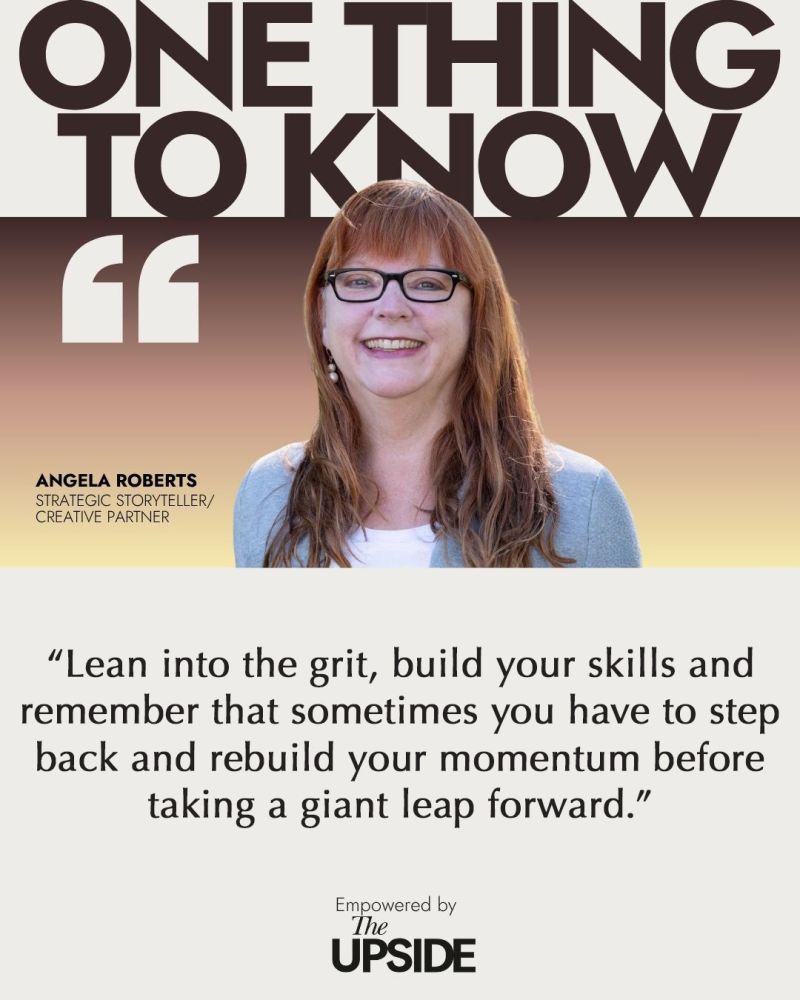
Lean into the grit, build your skills and remember that sometimes you have to step back and rebuild your momentum before taking a giant leap forward.

The Home of Undone Projects 

April 5, 2013

When our youngest daughter was an infant and we were searching for a quieter, safer place in Crawfordsville, Indiana, my husband found a 1950s brick ranch out in the country. The house itself wasn’t remarkable. In fact, it needed too much work. But the location was idyllic, with cows grazing across the road, a small neighborhood behind us and the Sugar Creek Trail just a short walk away. 

We watched that house for months as it languished on the market, and when the timing and price were right, took a chance on our third fixer-upper. The house had only two bedrooms and a single bath. The roof was actively leaking, and the dark walls and ceilings were dreary. But it was, we thought, the perfect place to raise our children and grow old together. 

As soon as we moved in that August, we began the work of making the house livable. Two bedrooms became three. The electricity was upgraded. And the roof was replaced (for the first of two times during our tenure there). And over the ensuing years, we stripped wallpaper, replaced fixtures, removed walls and put up new ones, all the while working and raising two very active children. 

We thought we would live in that house forever. So we took our time with the renovations, saving money by having Joe do most of the work. But gradually, our lives began moving north. Joe took a job in Lafayette. Then I began teaching part-time up there. Then I was offered a job with my favorite university, and we enrolled the kids in school across the river from Purdue. By 2009, all four of us were commuting in my Prius five days a week, leaving our home behind every day. 

Meanwhile, Joe continued to slog away at this Home of Undone Projects. A property that simply could not be sold as-is in the midst of the country’s worst housing crisis. And we continued to live in a state of renovation, me splashing new paint on the walls every now and then to pretty things up while Joe hammered, spackled and drilled. 

Over the ten years that we lived there, our children grew from toddlers to adolescents. On Christmas, they discovered overflowing stockings on a fireplace mantel constructed from an antique chalk rail. On Easter, they searched for eggs in the spacious back yard, where we had replaced the crumbling brick patio with a deck. And three times, they said goodbye to beloved pets, all buried where the garden pond used to be. 

Then last summer, a foreclosed builder’s model we had been watching on the south side of Lafayette was relisted at just the right price. A month later we were packing up a moving van and saying goodbye to Crawfordsville. 

I have to admit, when I moved out of the house last summer, I was relieved. After three house renovations over 22 years of marriage, I was beyond burned out. But when we left, the house and all its undoneness still beckoned. And so for six months, my intrepid husband commuted back to Crawfordsville nearly every weekend, installing trim, touching up woodwork and repainting walls and ceilings one last time. 

Halloween came and went. And then Thanksgiving, Christmas and Valentine’s Day. Finally, the weekend before Easter, the house was complete enough for a for-sale sign. 

This morning, less than two weeks after the house entered the MLS, we accepted an offer from a man who, we were told, has fallen in love with our house. That we found an enthusiastic and willing buyer so quickly is testimony to my husband’s meticulous attention to detail. 

It’s also a testament to his perseverance. I have complained, and admittedly, cried, many times in frustration over this home renovation. But Joe has never wavered in his dedication to see this project through to completion. He gets all the credit due for this victory. And my immense gratitude for finishing a home he will never get to fully enjoy.

Popular AI tools that work like your personal assistant

computer screen

I didn’t think I needed a Roomba until I spent three hours one afternoon meticulously vacuuming every floor of my house, throwing out my back as a result of my productivity.

Likewise, I didn’t think I needed AI productivity tools until I had too many overlapping deadlines and not enough time to accomplish my administrative tasks. Suddenly, my fear of turning over my work to a robot turned to relief when I realized how AI tools could free up my time for higher-order thinking, creativity and strategy.

Why it matters

As a marketing professional, you know that creating high-quality, impactful content and managing campaigns can be time-consuming and challenging. By using the power of advanced software, you can work faster, more efficiently and with greater accuracy.

Think of these digital assistants as your own expanded marketing team. They can help you with everything from catching mistakes in grammar, spelling and punctuation to capturing meeting notes, scheduling appointments and suggesting optimal times to post on social media.

Popular tools to check out

Here are a few popular automated and AI-driven options to consider:

Calendly: A scheduling automation tool that streamlines the process of booking meetings, Calendly relies on sophisticated logic and integrations to connect to your calendar, understand your availability and send automated reminders.

Fireflies: This note-taking tool can record and transcribe meetings, making it easier to review discussions and capture key information without having to manually jot everything down. Bonus: The app makes a to-do list, sorted by each person responsible, for all tasks discussed.

Grammarly: By identifying grammatical mistakes and suggesting corrections, Grammarly helps to ensure that your writing is error-free. Other features include a plagiarism checker and style guide.

Hemingway Editor: By identifying and highlighting complex sentences, passive voice and adverbs, Hemingway helps you write clear and concise prose. It’s a good option if you want to make your writing less wordy and more readable.

Sprout Social: A robust social media scheduling platform, Sprout Social has AI-powered features including optimal send times. The app analyzes your audience’s engagement patterns and historical data to recommend the best times to post your content for maximum reach and engagement. This takes the guesswork out of scheduling.

Writerly: To help writers improve their craft, Writerly provides feedback on grammar, style and clarity. If you’re wanting to more efficiently polish your prose, Writerly could be a good option for you.

Digging deeper

From automating administrative tasks like scheduling and note-taking to intelligently optimizing your social media presence, AI-driven tools empower you to achieve more.

As you free up valuable mental space, you’ll be able to channel more of your energy into the truly strategic and creative aspects of marketing, ultimately leading to more impactful campaigns and better results.

Featured image above: Photo by Carl Heyerdahl on Unsplash

Writing with Smart Brevity: When less really is more 

woman writing on paper

Whenever I hear the phrase “more with less,” I remember a colleague years ago in a meeting grumbling, “You can never do more with less. You can only do less with less.” 

While that is the case with budgets and FTEs, it’s also true that fewer words can have a bigger impact. That’s where Smart Brevity can help. 

Why it matters

In an era of information overload, it’s more important than ever to communicate in a concise and impactful way. Smart Brevity, created by the founders of news outlet Axios, is the ability to convey complex ideas in a simple and straightforward manner, using language that is both easy to understand and persuasive.

Ways that Smart Brevity can help

  • Increased attention and comprehension: When you use clear and concise language, your audience is more likely to pay attention to what you’re saying and understand your message.
  • Improved communication and collaboration: Because it distills text to key points, Smart Brevity can help break down barriers and foster better communication and collaboration between team members, clients and other stakeholders.
  • Enhanced credibility and influence: When you can articulate your ideas clearly and persuasively, your organization appears more knowledgeable and trustworthy.
  • Increased productivity and efficiency: Most writers agree that it’s harder to write shorter than longer. But eventually, you’ll develop a cadence and need less time to write each article. Shorter word counts also translate into less time conducting interviews and research.
  • Stronger impact and memorability: When you can convey your message in a concise and memorable way, it’s more likely to stick with your audience and have a lasting impact.

How Smart Brevity increased one team’s impact

In my capacity as a content director recently, I was charged with greatly increasing productivity and impact in a short time period among the members of a creative team. After team members read the Smart Brevity book and took a training course with Axios, I tasked them with immediately deploying its principles in content development. The result: increased efficiency, better audience engagement and enhanced brand recognition.

Here’s how we did it:

  • Eliminating unnecessary details: Smart Brevity helped us identify and remove irrelevant information, ensuring our stories focused on the core message and resonated with the audience.
  • Highlighting key moments: By concentrating on critical turning points and emotional peaks, we crafted narratives that were more engaging and memorable.
  • Structuring the story: Smart Brevity’s emphasis on clear structure helped our team organize our stories effectively, leading the audience on a journey with a satisfying conclusion.
  • Using active voice: By replacing passive voice with active voice, our stories became more dynamic and engaging, capturing the audience’s attention.
  • Employing concise language: We replaced jargon and complex sentences with clear, concise language that everyone could understand, regardless of their background.
  • Writing with vivid imagery: Smart Brevity encouraged us to incorporate vivid imagery and sensory details, making our stories more immersive and bringing them to life for audiences.

By boosting efficiency in writing, our team’s storytelling went from good to great, leading to supercharged productivity and impact. I encourage anyone who wants to improve the results of their storytelling to explore Smart Brevity and discover its transformative powers.